

Local Initiatives & Projects
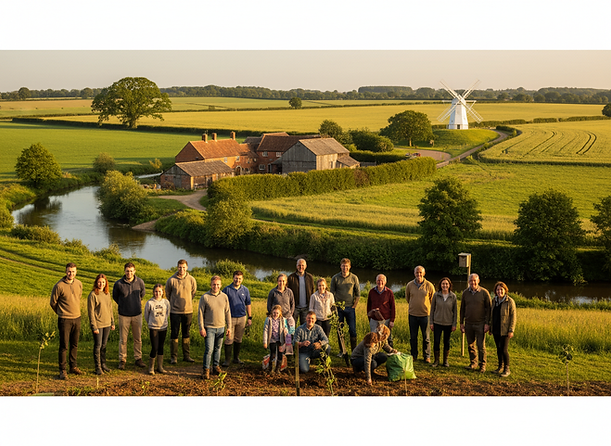
North Essex is shaped not only by its historic towns, villages and landscapes, but also by the people, organisations and local partnerships working to protect, improve and reimagine it for the future.
Across the area, a growing number of initiatives are helping to support nature recovery, strengthen rural communities, celebrate local heritage and explore new ways of living and working more sustainably. From landscape-scale conservation and farm cluster projects to environmental restoration, community-led ideas and long-term visions for places such as the Pant Valley, these projects reflect a shared commitment to caring for North Essex in ways that are practical, ambitious and rooted in local character. Together, they reveal a side of the region that is not only rich in history and countryside, but also active, forward-looking and full of ideas.
Farm Clusters
Farm clusters are a way for farmers and landowners to work together across a landscape, rather than field by field, to support both productive farming and a healthier natural environment. By sharing knowledge, identifying common priorities and planning at a wider scale, farm clusters can help create joined-up habitats, improve biodiversity, strengthen river corridors, restore hedgerows, support pollinators and wildlife, and make the countryside more resilient in the face of climate and environmental pressures.
That matters because nature does not stop at farm boundaries. Birds, insects, mammals and plant life all depend on connected landscapes, and rivers, soils, wetlands and hedgerows work best when they are cared for as part of a bigger picture. In local areas, farm clusters can bring real benefits not only for wildlife and farming, but also for water quality, flood resilience, landscape character and the long-term stewardship of the countryside.
In North Essex, this approach is being taken forward by the North Essex Farm Cluster, which brings together more than 40 farms and land managers. Formed in 2022, the cluster reflects a growing recognition that collaboration is one of the most effective ways to deliver meaningful environmental change at scale. Its work is rooted in the idea that wildlife has no boundaries, and that farmers, as custodians of a large proportion of the land, have a vital role to play in nature recovery, climate mitigation and the protection of local landscapes.
Supported by expertise from organisations such as FWAG East — the Farming & Wildlife Advisory Group serving Essex and the wider eastern region — this kind of partnership helps turn ambition into practical action. FWAG East’s work highlights how independent advice, habitat surveys, regenerative approaches, project delivery and landscape-scale partnerships can help farms remain viable while also protecting and enhancing the environmental value of the land. In that sense, farm clusters are not just about conservation: they are about shaping a countryside that is productive, connected, resilient and rich in life for the future.

Ground Control
Ground Control is an environmental services and landscape management company whose work focuses on creating, improving and maintaining healthier outdoor spaces. Their projects span areas such as biodiversity, ecology, woodland creation, grounds maintenance, landscape design, flood alleviation and low-carbon environmental solutions, reflecting a broad commitment to caring for land in practical and forward-looking ways.
Their work is especially relevant in places like North Essex, where farmland, river valleys, wildlife habitats and historic landscapes all sit closely alongside one another. By supporting better habitat management, environmental improvement and long-term stewardship, organisations like Ground Control can play an important role in helping local landscapes remain resilient, productive and rich in nature.
Active in North Essex, Ground Control represents part of a wider movement towards more joined-up thinking about land, nature and the future of the countryside. Whether through biodiversity-led projects, landscape recovery or practical environmental management, their work reflects the growing importance of caring for rural places in ways that benefit both people and wildlife.

River Pant
The River Pant runs through one of North Essex’s most distinctive rural landscapes, shaping the character of the valley and connecting communities, farmland, wildlife habitats and historic places along its course. More than a river, it is part of the natural framework of the Pant Valley, helping define a landscape that is valued not only for its beauty, but for the way it supports nature, local livelihoods and a strong sense of place.
The importance of the River Pant lies in the way it links everything together. Its corridor forms part of a wider network of fields, brooks, grassland and woodland, creating opportunities for habitat recovery and stronger ecological connections across the valley. In an area where farming, heritage and village life are closely intertwined, the river also plays a quiet but vital role in supporting landscape character, biodiversity and the long-term health of the countryside.
What makes the Pant Valley especially compelling is the growing effort to care for and strengthen this landscape for the future. Across the wider area, local landowners, communities and organisations are already working on nature recovery projects, habitat restoration and long-term planning that recognises the value of the valley as a connected whole. These interventions are not just about conservation in isolation, but about creating a healthier, more resilient place where environment, heritage, community and rural enterprise can support one another.
The River Pant sits at the centre of that story. It is part of a wider vision for a landscape where natural recovery, sensitive stewardship and local opportunity go hand in hand. Whether through improved habitat links, better access to green spaces, or a stronger appreciation of the valley’s heritage and wildlife, the river helps anchor a future that is both practical and hopeful. For visitors and residents alike, it offers a way of understanding the Pant Valley not simply as countryside to pass through, but as a living landscape with real depth, value and potential.

Spains Hall Beaver Watch
At Spains Hall near Finchingfield, one of North Essex’s most inspiring conservation stories is quietly taking shape. The estate is home to the first beavers to return to Essex in more than 400 years, part of a wider and deeply ambitious approach to land management that looks beyond preservation alone. Here, the focus is on restoring natural processes, improving habitats, managing water more sustainably and creating a landscape that works better for wildlife, people and the future of the countryside.
What makes the work at Spains Hall especially compelling is that it is not just about one species, however remarkable that return may be. The beavers form part of a much broader vision for a healthier and more resilient rural landscape, where farming, biodiversity, woodland care, flood management and long-term environmental stewardship are all considered together. It is a place where practical local action is helping to show how the countryside can be cared for in ways that are both innovative and rooted in the character of the land itself.
There is also a strong community dimension to what is happening here. Through collaboration with the Wilderness Foundation UK, Spains Hall is helping create opportunities for education, outdoor learning and deeper connections with nature, particularly for young people.
That gives the project a wider significance: it is not only about protecting and improving the landscape, but also about helping people understand it, value it and feel part of its future.
For visitors exploring this part of North Essex, Spains Hall offers a powerful example of how local initiative, environmental care and community benefit can come together in one place. It shows that countryside preservation is not simply about holding things still, but about guiding change thoughtfully — restoring habitats, supporting wildlife and creating a landscape that can thrive for generations to come.
