


Castles & Grand Houses
North Essex is full of places where history still feels close at hand, and nowhere is that more evident than in its castles, grand houses and historic estates. From the grandeur of Audley End House and the Norman strength of Castle Hedingham to the hands-on medieval world of Mountfitchet Castle, these are places that bring the past vividly to life.
Some impress with scale and elegance, others with atmosphere, stories and centuries of survival, but all offer a glimpse into the people, power and daily life that shaped this part of Essex. Whether you are drawn to sweeping grounds, historic interiors, family adventures or simply the romance of old stone and long history, North Essex has plenty to explore.
Audley End House
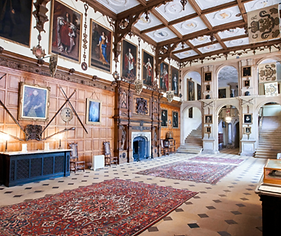
Audley End House & Gardens is one of England’s most impressive Jacobean country houses, with a history stretching back to the early 17th century. Built in the early 1600s for Thomas Howard, 1st Earl of Suffolk, on the site of the former Walden Abbey, it was designed to display wealth, status and royal favour on a grand scale.
Over the centuries it passed through different owners, most notably the Braybrooke family, who helped shape the house and estate as visitors see them today.
Set just outside Saffron Walden, Audley End offers far more than a glimpse inside a historic house. Visitors can explore the beautiful gardens and grounds, enjoy the much-loved model railway for children, and experience a varied programme of concerts, seasonal events and family activities throughout the year. Whether you are drawn by architecture, history, gardens or a memorable day out, Audley End is one of North Essex’s standout attractions.
Castle Hedingham
Castle Hedingham is one of the best-preserved Norman keeps in England, with a history that reaches back nearly 900 years. Built in the 12th century by the powerful de Vere family, Earls of Oxford, it has stood at the heart of the village for centuries and remains one of North Essex’s most striking historic landmarks. Its great stone keep, commanding position and long association with one of medieval England’s most influential noble families give it a real sense of strength, status and continuity.
Today, Castle Hedingham offers visitors the chance to step inside a remarkable piece of medieval history while also enjoying the wider estate and its lively calendar of events. Alongside the historic interiors and grounds, the castle regularly hosts reenactments, jousts, family activities, weddings, concerts and seasonal events throughout the year. Whether you are interested in Norman architecture, medieval history or simply exploring one of Essex’s most atmospheric historic sites, Castle Hedingham is a memorable place to visit.

Mountfitchet Castle
Mountfitchet Castle offers a very different kind of historic experience, bringing the world of the Normans and early medieval England vividly to life. Reconstructed on the site of a former motte-and-bailey castle in Stansted Mountfitchet, it reflects the kind of fortress that would have stood here shortly after the Norman Conquest of 1066. The original castle is thought to have been built by Richard de Montfichet, whose family gave the village its name, and the site has long been associated with the turbulent early years of Norman rule.
Today, Mountfitchet Castle is an immersive and family-friendly attraction where visitors can explore a recreated medieval village, wooden fortifications and historic dwellings, offering a hands-on sense of what life may have been like nearly a thousand years ago. Alongside the castle itself, the site also includes the House on the Hill Toy Museum, adding another layer of interest for families and curious visitors alike. With its unusual open-air setting, living-history feel and strong sense of atmosphere, Mountfitchet Castle is one of North Essex’s most distinctive historic attractions.

Paycocke's House
Paycocke’s House and Garden is one of the finest surviving Tudor merchant’s housesin Essex, offering a more intimate but no less fascinating glimpse into the region’s past. Built in the early 16th century for Thomas Paycocke, a wealthy cloth merchant, the house reflects the prosperity of Coggeshall’s wool tradeat a time when the town was an important centre of commerce and craftsmanship. Its elaborate timber framing, carved details and beautifully preserved character make it one of North Essex’s most distinctive historic houses.
Now cared for by the National Trust, Paycocke’s House invites visitors to step into a smaller-scale world of Tudor domestic life, full of texture, craftsmanship and quiet charm. The house is complemented by a walled garden, adding to its appeal as a peaceful and rewarding place to explore. For those interested in architecture, local history and the stories behind Essex’s historic towns, Paycocke’s House and Garden is a wonderful addition to any North Essex itinerary.

Cressing Temple Barns
Cressing Temple Barns is not technically a castle or grand house, but it more than earns its place among North Essex’s great historic sites. Built in the 13th century by the Knights Templar, one of the most powerful and wealthy religious military orders of the medieval world, the site reflects a different kind of grandeur — one rooted in status, landholding, agriculture and the reach of an extraordinary international order. Its two vast timber-framed barns, the Barley Barn and Wheat Barn, are among the oldest and finest medieval barns in England, and their scale and craftsmanship remain deeply impressive today.
Originally part of a Templar estate, Cressing would have played an important role in supplying food, storing produce and supporting the wider network of the order’s lands and influence. After the suppression of the Knights Templar in the early 14th century, the estate passed to the Knights Hospitaller, adding another layer to its long and fascinating history. Today, visitors can explore not only the remarkable barns themselves but also the gardens, historic buildings, exhibitions and seasonal events that bring the site to life. For anyone interested in medieval history, architecture or the quieter but equally powerful traces of the past, Cressing Temple Barns is one of Essex’s most unusual and rewarding places to visit.
